Your Startup Does Not Need to Look Big
It needs to look clear.
A startup begins with an idea, a product, or a problem worth solving. In the early days, almost everything is focused on getting the business moving.
The product comes first.
Then sales.
Then customers.
Branding often comes later.
That’s understandable.
But customers don’t experience your business in the same order you built it.
They see your name.
Your logo.
Your website.
Your packaging.
Your social media.
Then they decide whether the business feels worth their attention.
For a startup, that first impression can carry more weight than expected.
You may have a great product, but customers cannot experience its quality until they trust it enough to try.
That’s where brand identity matters.
A Startup Has Only a Few Seconds to Be Understood
People see hundreds of brands every day.
Most disappear from memory almost immediately.
The ones that stay are usually easy to recognise.
They have a clear personality.
Their visuals feel connected.
Their message makes sense.
Nothing feels accidental.
A startup doesn’t need an expensive-looking identity simply to appear established.
It needs an identity that makes its value easier to understand.
Good branding doesn’t pretend a young company has twenty years of history.
It gives people a reason to believe in what the company is building.
A Logo Is Only the Beginning
Many founders start their branding journey with a logo.
That’s where the conversation often becomes too narrow.
A logo is important.
But it cannot carry an entire business.
A startup also needs decisions around:
- Colour
- Typography
- Photography
- Packaging
- Brand voice
- Website design
- Social media
- Product presentation
- Sales materials
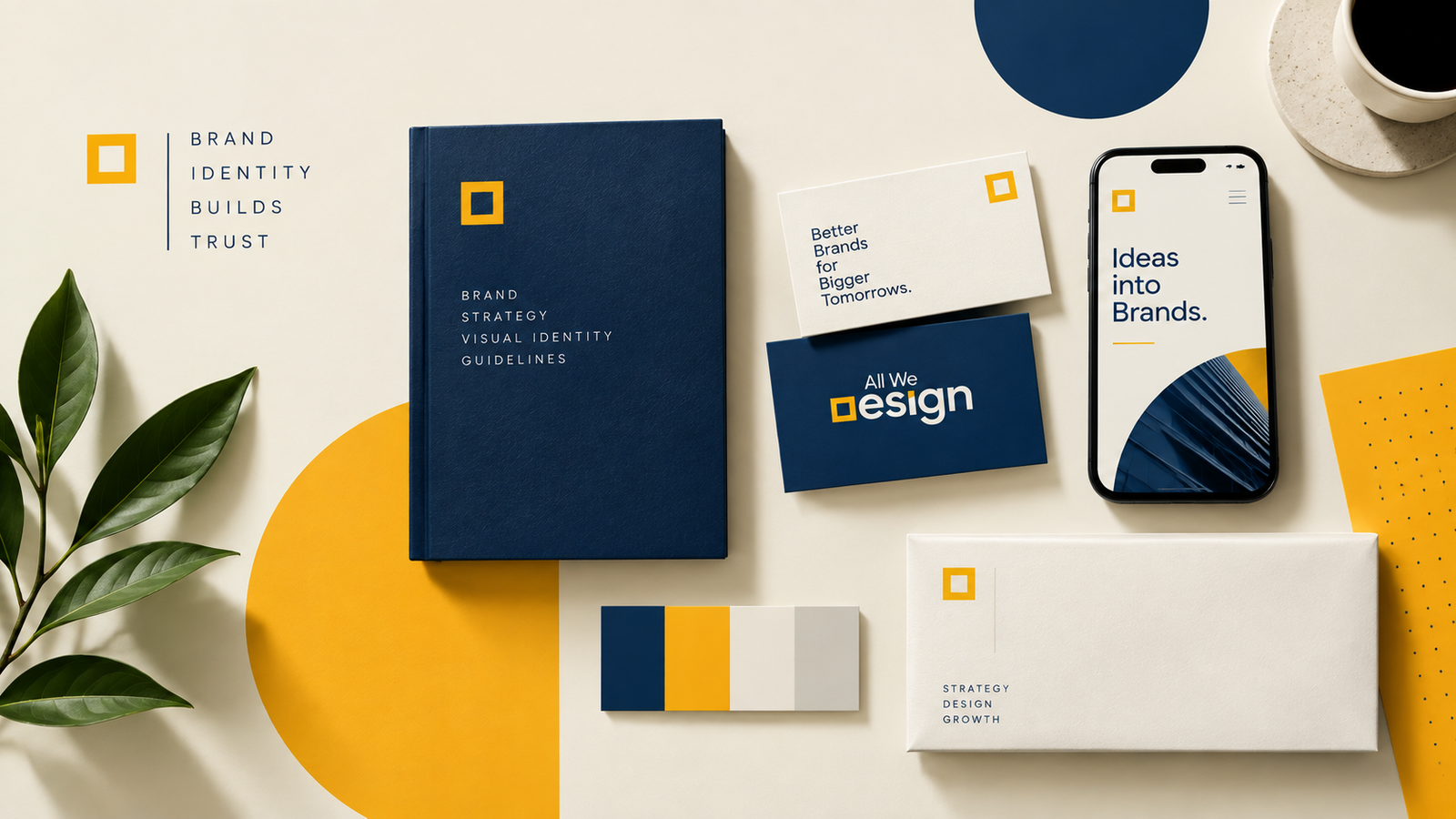
- Brand guidelines
These elements create the identity people actually experience.
When they work together, recognition becomes easier.
When they don’t, even a strong logo can feel disconnected.
Why Startups Should Think About Branding Early
There is a common assumption that startups should wait until they become successful before investing in their brand.
We see it differently.
Branding is not only about how an established company looks.
It helps shape how a new company enters the market.
A clear identity can help a startup:
- Make a stronger first impression
- Communicate its positioning
- Build recognition
- Look consistent across platforms
- Present products more clearly
- Create confidence among potential customers
- Make future marketing easier
- Build a foundation for growth
It doesn’t guarantee sales.
Nothing in branding does.
But it can remove some of the uncertainty customers feel when encountering a new business for the first time.
Start With the Business, Not the Design
Before thinking about colours or fonts, there are better questions to ask.
Who are you trying to reach?
What problem are you solving?
Why should someone choose you?
What makes the business different?
What should customers remember?
Where will the brand appear?
What will the business look like three years from now?
The answers influence the identity.
This is why two startups selling similar products can need completely different branding.
The product category may be the same.
The story is not.
What We Have Learned From Real Projects
One of the biggest lessons from our work is that good branding rarely starts with a blank page.
It starts with context.
A business already has customers, competitors, expectations, limitations, and ambitions.
The job is to understand those things before making visual decisions.
We’ve seen how a fashion business can need personality without becoming overly decorative.
How a food brand can need shelf recognition without becoming loud.
How an established business can evolve without losing familiarity.
These lessons become particularly useful for startups because young brands have the opportunity to establish good habits from the beginning.
Building a Brand That Can Grow
A startup may launch with one product.
A year later, there may be five.
Then ten.
The brand identity needs to accommodate that growth.
This is especially important for food, fashion, FMCG, beauty, and consumer product businesses.
Imagine creating packaging for one product today and discovering later that every new product needs a completely different design.
Recognition becomes difficult.
A better approach is to create a visual system.
The core identity stays consistent.
Individual products can still have their own character.
That balance allows a startup to grow without constantly reinventing itself.
Packaging Is Especially Important for Consumer Startups
For a consumer startup, packaging may be the first physical interaction a customer has with the brand.
The package is held.
Photographed.
Displayed.
Shared.
Placed on shelves.
Sometimes it stays in a customer’s home for weeks.
That’s a lot of brand exposure from one object.
This is why packaging should not be treated as the final artwork after the product has been developed.
It should be part of the brand conversation from the beginning.
The package needs to communicate what the product is, who it is for, and what kind of experience customers should expect.
Startups Need Digital and Physical Consistency
A customer might first see your startup on Instagram.
Then visit your website.
Then find your product on a marketplace.
Finally, they may encounter the packaging in a store.
If each experience looks unrelated, recognition becomes harder.
The customer shouldn’t feel like they are meeting four different companies.
The same identity should travel.
From screen to shelf.
From website to package.
From presentation to social media.
That doesn’t mean every application should look identical.
It means they should feel like they belong to the same brand.
Strategic Branding Compared With DIY Branding
Strategic Brand Identity |
DIY Branding |
| Starts with business positioning | Starts with visual templates |
| Built for long-term use | Often designed for immediate needs |
| Creates a connected identity | Individual assets may look unrelated |
| Can expand with new products | New products may require new visual decisions |
| Supports consistent communication | Different platforms may look different |
| Designed around the target customer | Often designed around personal preference |
DIY tools are useful.
They have made design more accessible to founders.
But accessibility does not remove the need for judgment.
The difficult part isn’t choosing a font.
It’s knowing why that font belongs to your brand.
Original Experience From Our Work
A pattern we’ve noticed across branding projects is simple.
Founders often know their business extremely well.
They know their product.
They know their customers.
They know why the company exists.
What they sometimes struggle with is turning all that knowledge into one clear visual story.
That’s where an outside perspective becomes useful.
Not to replace the founder’s understanding.
To organise it.
Good branding should make the business easier to explain, not more complicated.
Case Study: B.L.F Liza Dresses
The Challenge
Fashion is a category where visual perception matters immediately.
For B.L.F Liza Dresses, the identity needed to create a clear and recognisable presence while remaining relevant to the fashion space.
Our Thinking
The focus was not simply on making the logo attractive.
The larger question was how the identity could communicate the personality of the business across different touchpoints.
Fashion brands need enough character to be remembered, but enough flexibility to work across collections and communications.
The Solution
The project explored branding, logo design, and fashion branding through a visual direction designed around recognition and consistency.
The identity was treated as a broader brand expression rather than a standalone mark.
The Result
The work created a more connected visual language for the brand.
For a startup entering fashion, the lesson is useful.
Your identity should be able to support the products you have today without limiting the products you may introduce tomorrow.
View the B.L.F Liza Dresses case study
Case Study: Sarfa Gold
The Challenge
Consumer products often compete for attention before customers know anything about the company behind them.
Sarfa Gold needed packaging and brand identity that could communicate the product clearly while creating a stronger visual presence.
Our Thinking
Premium does not have to mean complicated.
We focused on creating a visual direction where colour, typography, hierarchy, and composition worked together.
The goal was clarity with confidence.
The Solution
The project combined packaging design with FMCG branding and brand identity thinking.
The visual system was designed to make the product easier to recognise while creating a consistent brand presence.
The Result
The work gave Sarfa Gold a more considered visual expression.
For startups, there is a valuable takeaway here.
Your packaging does not need to shout.
It needs to make the right impression quickly.
View the Sarfa Gold case study
Case Study: Raju Da Enterprises
The Challenge
Not every branding project begins with a completely new company.
Sometimes the business already has history and recognition.
The challenge is evolving the identity without losing what customers already know.
Our Thinking
We believe rebranding should have a reason.
Changing a logo simply because it feels old is not enough.
The important question is what the business needs to communicate now.
The Solution
The Raju Da Enterprises project focused on logo design and brand identity with an emphasis on creating a clearer visual expression.
The work considered how the identity could represent the business across different applications.
The Result
The project demonstrates how an established identity can evolve while maintaining a connection with the business’s existing character.
Startups can learn from the same principle.
Build recognition before constantly trying to reinvent yourself.
View the Raju Da Enterprises case study
Case Study: Anupam’s Namkeen
The Challenge
Food startups enter one of the most visually competitive categories.
A new product can sit beside brands that customers have known for years.
Anupam’s Namkeen needed packaging that could create a stronger visual presence while reflecting the character of the snack brand.
Our Thinking
Food packaging has two jobs.
It needs to communicate what is inside.
It also needs to give people a reason to notice it.
The design direction therefore focused on recognition, clarity, and a consistent visual family.
The Solution
The project brought together packaging design and snack branding to create a more connected product presentation.
The identity was considered across the packaging rather than treating each element as an isolated piece.
The Result
The result is a clearer expression of the brand through its packaging.
For food startups, the lesson is straightforward.
A good product deserves packaging that helps customers discover it.
View the Anupam’s Namkeen case study
What These Case Studies Tell Us
Four businesses.
Four different situations.
One common lesson.
Branding works best when it begins with the business rather than the design.
B.L.F Liza Dresses needed a fashion identity with personality.
Sarfa Gold required stronger product presentation.
Raju Da Enterprises needed clarity while respecting an existing business identity.
Anupam’s Namkeen needed packaging that could help a food product communicate in a crowded category.
There is no universal formula.
That’s the point.
What Should a Startup Include in Its Brand Identity?
A practical startup identity may include:
- Brand positioning
- Logo and logo variations
- Colour system
- Typography
- Brand voice
- Photography direction
- Packaging design
- Social media direction
- Website design
- Business stationery
- Marketing templates
- Brand guidelines
Not every startup needs everything on day one.
The right scope depends on where the business is going.
A founder launching a digital service may need a different starting point from a food startup preparing for retail shelves.
Good branding is not about doing more.
It’s about doing what matters.
The Cost of Inconsistent Branding
Inconsistent branding has a hidden cost.
You spend time recreating designs.
Different people make different decisions.
New products look disconnected.
Customers see different versions of the business.
Marketing becomes harder to manage.
Eventually, everything needs to be corrected.
A simple brand system can prevent much of this.
Clear rules give teams confidence.
They know which logo to use.
Which colours belong to the brand.
How typography should work.
How packaging should feel.
How the business should sound.
That structure becomes increasingly valuable as the startup grows.
How We Think About Startup Branding
At All We Design, we don’t believe a startup needs to imitate an established corporation.
A young business should have room to feel young.
But it should also feel intentional.
Our role is to understand what the business is trying to become and create an identity that supports that direction.
Sometimes that means starting from scratch.
Sometimes it means refining an existing identity.
Sometimes the biggest improvement comes from creating consistency between assets that already exist.
The answer depends on the business.
Your First Impression Should Have a Reason
A startup doesn’t need to look established.
It needs to look intentional.
That’s a different goal.
The strongest young brands aren’t necessarily the loudest brands in the market.
They are the ones customers can understand.
The ones they can recognise.
The ones that give people confidence to take the next step.
Your product may be what brings someone in.
Your brand is what helps them remember why they chose you.
At All We Design, we believe good branding starts with better questions.
Before asking how your startup should look, ask what you want people to remember.
That answer can shape everything that comes next.
Frequently Asked Questions
When should a startup invest in brand identity?
Ideally, before launching publicly or before entering a major growth phase. A clear identity makes it easier to build recognition from the beginning.
Does every startup need a professional logo?
A logo is useful, but a logo alone is not a complete brand identity. The surrounding visual system matters just as much.
Can branding help a startup attract customers?
It can influence perception and recognition, which are important parts of the buying journey. However, branding works alongside product quality, pricing, distribution, service, and marketing.
Should startups follow current design trends?
Trends can provide inspiration, but copying them can make a brand look temporary. A startup should first understand its audience and positioning.
Can a startup change its branding later?
Yes. Brands evolve as businesses grow. The stronger the initial identity system, the easier it can be to make future changes without losing recognition.
Can packaging be part of startup branding?
Absolutely. For consumer and food startups, packaging is often one of the most important physical expressions of the brand.